You find a body wash that says “Fragrance Free” on the front, and you hold your phone over the barcode to be sure. We did exactly that. We tested six ingredient-scanner apps the way someone avoiding fragrance would, and scanned the same “Fragrance Free” body wash in every one. The wash listed heliotropine, which the EU’s ingredient database lists with fragrance and perfuming functions. None of the apps warned us about it. Several made us sign up, accept every consent preference, or pay before showing what we came for. In our view, that puts the business ahead of the people who need these answers most.
Evidence key Strong Moderate Weak How we grade
All six were tested on an Android phone on October 3, 2026. We have no connection to any of these companies and earn nothing from them.
The six apps side by side
| App | Account to search? | Paid tier we saw | Free fragrance filter or avoid setting? | A fragrance product we checked | Our “fragrance free” body wash scan | Trash bags? |
|---|---|---|---|---|---|---|
| EWG Healthy Living | No | Ingredient Preferences need Premium | No; free keyword search for “fragrance free” | Eau de toilette: 2 overall, while its “Fragrance” rated 8 | Found it; rated 2; heliotropine scored 3, not marked as fragrance | No |
| SkinSAFE | Yes | $59.99 a year or $8.99 a month | Yes, a free Fragrance Free filter | Perfumes scored 91; the “Product Is Not” section was Premium | Found it; “being reviewed,” no rating | No (0 results) |
| Yuka | Yes | Pay what you want, $15 a year when we opened it | No | No perfume checked (name search was members only); a scented body wash scored 86, with “Fragrance” marked “Low risk” | 37/100 “Poor”; heliotropine “Risk-free” | Couldn’t search without paying |
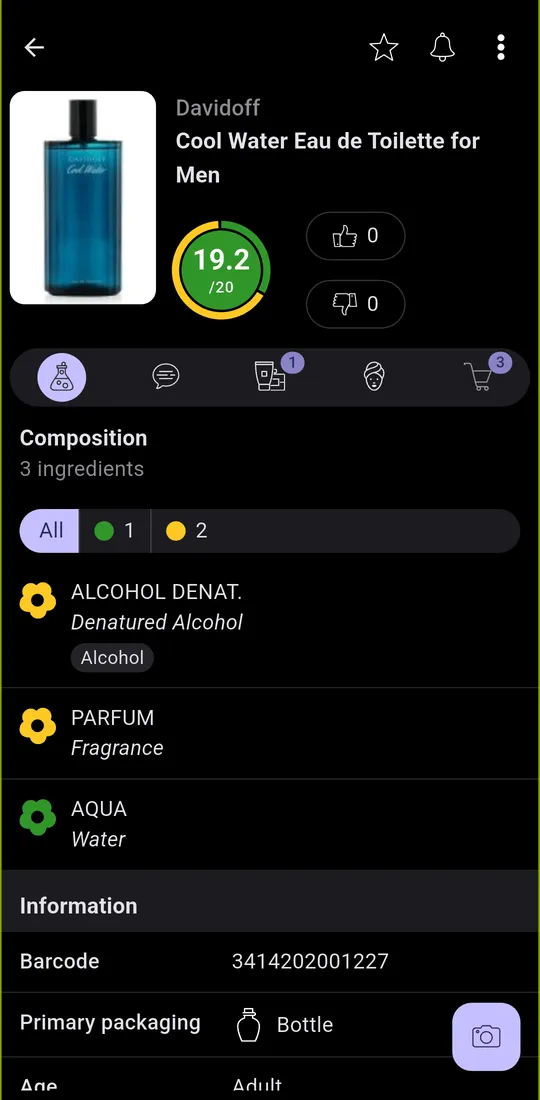
| INCI Beauty | No (an ad first) | Excluding ingredients needs an account or Premium | No | Cool Water eau de toilette: 19.2 out of 20 | 9.5 out of 20; heliotropine listed as a possible “Fragrance agent,” with “No penalty” | No text search |
| PureCheck | No | $4.99 a month or $29.99 a year | Yes, a free avoid-fragrance setting | Perfume: “75% Fit” even with fragrance set to avoid | “90% Fit”; heliotropine listed but not flagged | No |
| Think Dirty | Yes, for search; all consent preferences required | $3.49 a week, or $48.99 a year after a trial | No (alerts padlocked) | Cool Water rating padlocked | Found it; rating padlocked | Yes, one: a mint-scented bag, rated 10 |
Six apps, one “fragrance free” body wash
We scanned Cetaphil Ultra Gentle Body Wash, labeled “Fragrance Free,” in all six apps. Its ingredient list includes heliotropine. The European Commission’s CosIng database lists “fragrance” and “perfuming” among heliotropine’s cosmetic functions. The label doesn’t say why it’s there. Our free label decoder flags the name because of those listed functions.
Here is how each app handled it. None of the apps warned us about it. INCI Beauty even listed “Fragrance agent” among heliotropine’s possible functions, then gave it “No penalty.” Yuka called it “Risk-free.” PureCheck listed it, then rated the product a “90% Fit” with fragrance set to avoid. EWG scored the ingredient a 3 without identifying it as fragrance. SkinSAFE said the product was still being reviewed, and Think Dirty kept its rating behind a padlock.
The words on the front of the bottle aren’t the end of the story, as earlier surveys found. Fragrance allergens turn up in "fragrance-free" moisturizers and personal-care products across at least four independent surveys: Scheinman named ten US "fragrance-free" products with fragrance ingredients in 1999 (benzyl alcohol in 5 of 10), dermatologists named nine more major-brand examples containing benzyl alcohol in 2007 (including a baby lotion), two of Scheinman's own named products (Cetaphil Moisturizing Cream, Moisturel Therapeutic Lotion) reappear on this list, a 2016 survey of best-selling US body moisturizers found 18 of 40 labeled "fragrance free" (45%) listed at least one ingredient dermatologists flag for fragrance-allergic patients, and a 2015 survey of 187 US pediatric personal-care products found that of the 52 labeled "fragrance free," 42 (80.8%) contained at least one contact allergen from the standard NACDG screening tray (55.8% had >=2). Strong evidence. Jacob & Barron 2007
Where the apps let us down
Scores that bury the fragrance. EWG gave an eau de toilette a green 2 while its own ingredient list rated “Fragrance” an 8. INCI Beauty gave Cool Water 19.2 out of 20. PureCheck called a perfume a “Good fit” after we told it to avoid fragrance. In our tests, those overall scores didn’t reliably tell us whether a product contained fragrance.

The information we wanted, behind a paywall. SkinSAFE scored perfumes 91 and put its “Product Is Not” section, which SkinSAFE says explains why a product doesn’t meet a marker, behind Premium. Think Dirty padlocked the rating on Cool Water and on our body wash, along with its allergen alerts. We think locking that information away from people with reactions is the wrong call.

Walls before you can look. SkinSAFE and Yuka required an account before showing anything useful. Think Dirty asked for our location and wouldn’t run until we accepted all of its consent preferences. Yuka charged to search by name and locked most beauty rankings behind “invite a friend.”
Ads, “Promoted” results, and “Sponsored” spots. INCI Beauty opened with a full-screen ad. PureCheck showed banner ads. Think Dirty put a product labeled “Promoted” at the top of a “fragrance free” search and a carousel labeled “Sponsored” on its home screen.
Coverage has gaps, too. Take EWG’s database. About a third of the personal care products people actually used were not in EWG's Skin Deep database at all, including 39% of perfumes and nearly all intimate-care products, so their hazards could not be rated. Moderate evidence. Barrett 2025
The few things that actually helped
- SkinSAFE’s free Fragrance Free filter cut 2,019 laundry detergents down to 667.
- On a Dior perfume page, PureCheck, set to avoid fragrance, named “Fragrance” and eight chemicals in red as conflicts, with no account and no payment.
- EWG’s free Ingredients tab shows how it rates “Fragrance” in each product, if you open it.
- Think Dirty was the only app where we found a trash bag, and it rated the mint-scented one 10, its worst score.

What you can do
- Read the ingredient list yourself. Paste it into our free label decoder, which flags heliotropine because CosIng lists “fragrance” and “perfuming” among its functions, or look ingredients up in our ingredient guide.
- Use a free filter as a starting point: SkinSAFE’s Fragrance Free filter or PureCheck’s avoid-fragrance setting. Then check the list anyway.
- Never trust a single score. Open the ingredient detail every time.
- Don’t pay just to inspect an ingredient list. Start with the list on the package, then check unfamiliar ingredients with CosIng or our label decoder.
- If you have a diagnosed fragrance allergy, ask your dermatologist about choosing products from a checked database such as ACDS CAMP or SkinSAFE. If you are allergic to fragrance, dermatologists advise avoiding all fragrance rather than only the chemicals you tested positive to, and choosing products from a checked database such as the ACDS CAMP list or SkinSAFE instead of trusting 'fragrance-free' claims. Moderate evidence. Rodriguez 2024
One more reason not to hand your judgment to a score: the industry’s own fragrance limits weren’t written for people who already react. The industry's fragrance safety-limit system (QRA/IFRA Standards) is explicitly designed to prevent new fragrance allergies from developing, not to protect people who are already allergic from reacting to a compliant product. Strong evidence. Api 2020 (RIFM/IFRA) Industry-funded Apps that score fragrance as a small penalty, or charge to explain it, leave those same people guessing.
Nobody with a reaction should have to pay, sign up, or accept a wall of consent boxes to find out what is in a bottle. Until labels and apps say it plainly, push for fragrance-free to be the default: take the pledge or join the community.
App details are from our own tests on October 3, 2026, and may have changed. Research findings show their evidence grade and source. Screenshots are of each app, shown for review. Information, not medical advice.